
The short answer
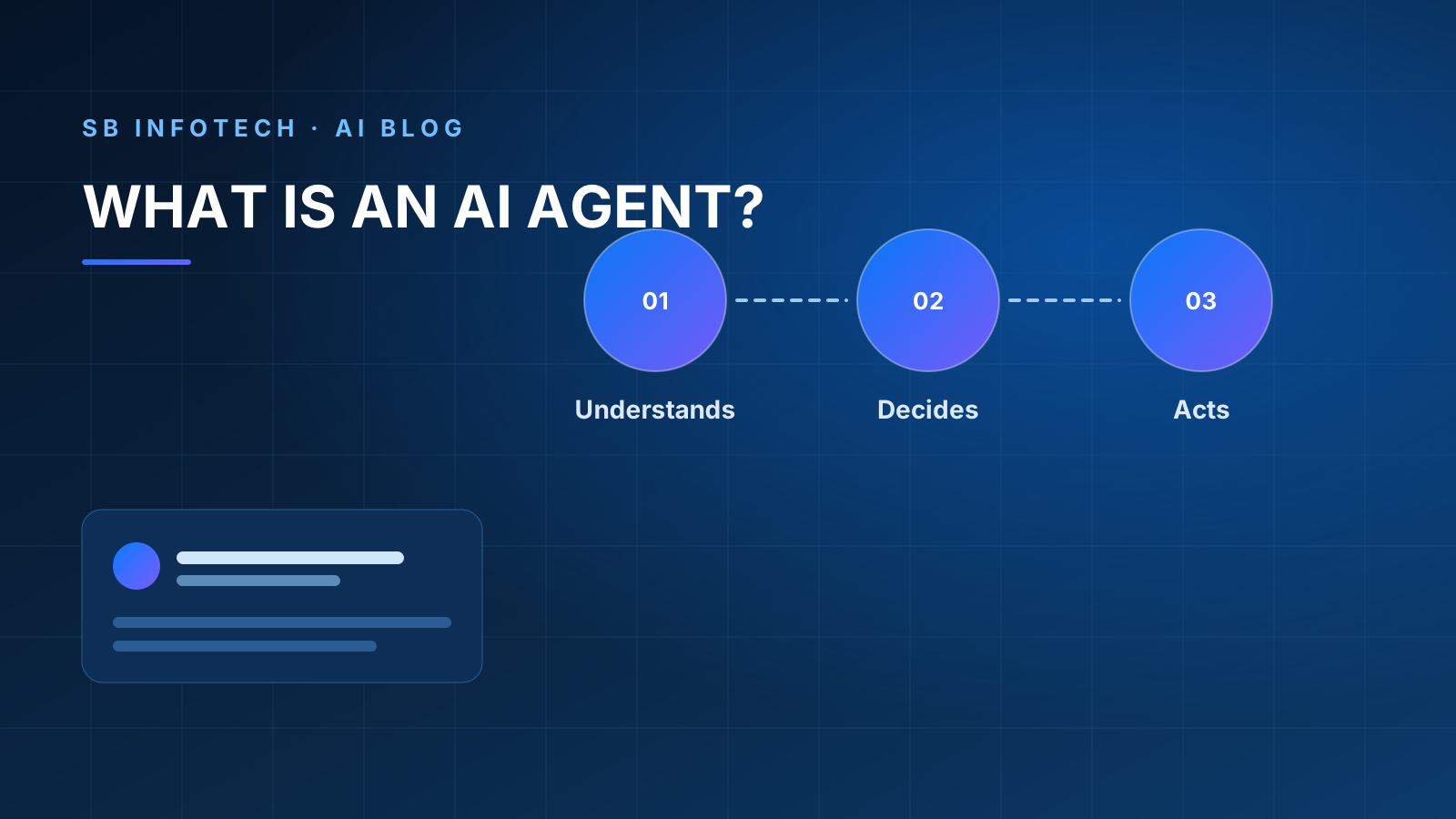
An AI agent is software that understands a request written or spoken in everyday language, decides what needs to happen, and then takes action using the tools and data you give it access to. A customer might ask "Where is my order?" and the agent looks up the order, explains the status and offers to change the delivery slot.
Chatbot, automation or agent?
A classic chatbot follows a fixed script and breaks when people phrase things differently.
Rule-based automation is reliable for predictable steps, but it cannot understand free-form requests.
An AI agent combines both: it understands natural language like a person, and it acts through approved tools like an automation.
What an agent is made of
A language model that understands the request and writes the reply.
Instructions that define the role, the tone and what the agent must never do.
Knowledge: your products, policies and FAQs, so answers come from your business, not the open internet.
Tools: carefully limited actions such as "check order status", "book appointment" or "create CRM lead".
Guardrails and handoff: rules for when to stop and pass the conversation to a person.
What agents do well today
Answering repetitive customer questions on website chat, WhatsApp or the phone.
Qualifying leads and booking meetings.
Sending reminders and confirmations, and handling simple changes.
Reading documents and extracting the fields your team needs.
Where you still need people
Agents work best on high-volume, well-defined tasks. Complex negotiations, sensitive complaints, legal or medical judgements and anything with significant financial risk should stay with your team, with the agent preparing the context so people can act faster.
How to start
Pick one conversation your team handles many times a day, write down the ten most common questions and the answers you want, and decide which single action would save the most time. That is the right size for a first agent: narrow, measurable and easy to review.
Let's build the right solution.
Every business has its own processes, customer expectations and integration requirements. Let's discuss what will work for yours.
Discuss your project ↗