
The problem RAG solves
A general AI model knows a lot about the world but nothing about your price list, your return policy or last week's product update. Asking it directly invites confident guesses. Retrieval-augmented generation, or RAG, fixes this by giving the model the right pieces of your own content at the moment it answers.
How it works in three steps
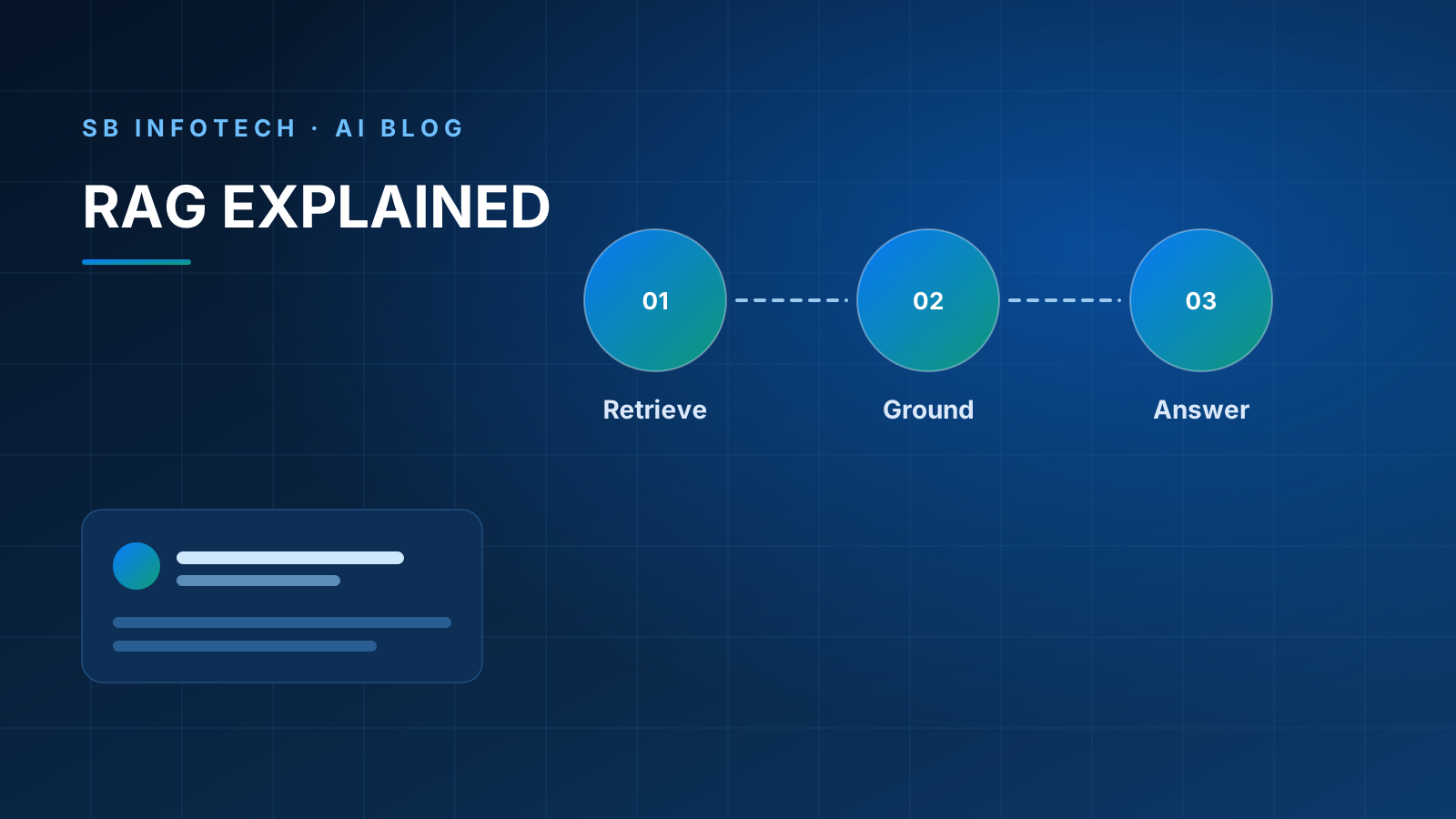
Prepare: your documents, FAQs and product data are split into small passages and indexed so they can be searched by meaning, not just keywords.
Retrieve: when a question arrives, the system finds the few passages most relevant to it.
Generate: the model writes the answer using only those passages, and can show which source it used.
When RAG is the right choice
Answers depend on information that changes often, like prices, stock or policies.
You have many documents: manuals, SOPs, contracts or knowledge-base articles.
You need answers you can trace back to a source.
When you need something else
If the task requires live data, such as the status of a specific order, the agent should call a tool or API instead of searching documents. Many good assistants combine both: RAG for knowledge and tools for actions.
Keeping answers accurate
Keep one current source of truth and remove outdated documents.
Write clear, specific content: AI cannot fix a vague policy.
Tell the assistant to say when it cannot find an answer.
Test with real questions and review the sources it used.
Privacy and access
Only index content the assistant's users are allowed to see. For internal assistants, respect the same permissions your team already has, so a question cannot reveal a document someone should not read.
Let's build the right solution.
Every business has its own processes, customer expectations and integration requirements. Let's discuss what will work for yours.
Discuss your project ↗