
Why guardrails matter
Language models are fluent, which makes their mistakes sound convincing. Guardrails are the rules, limits and checks that keep an agent useful when real customers start using it.
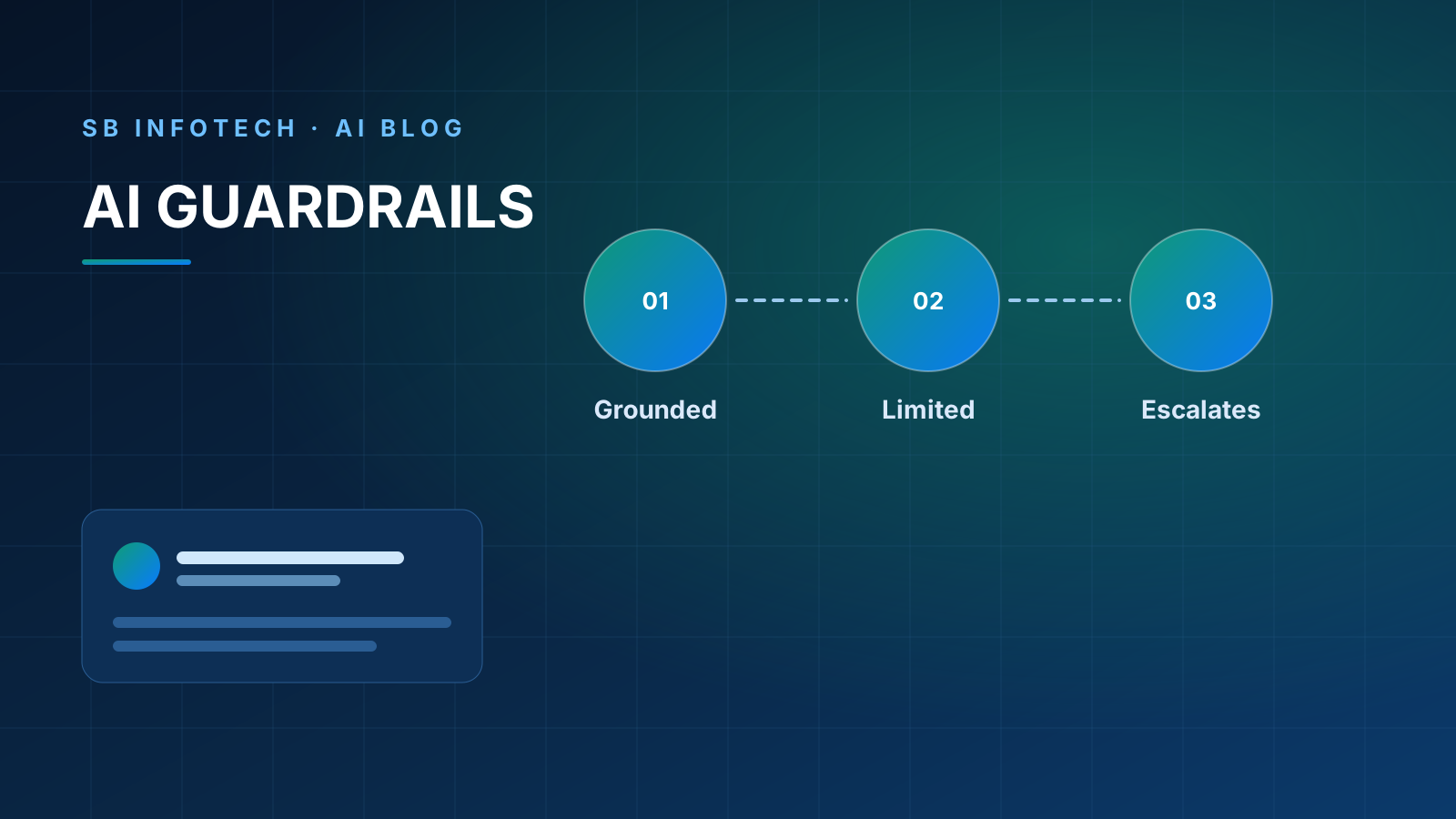
1. Ground every answer in your content
Give the agent your approved product information, pricing rules and policies, and instruct it to answer only from them. When information is missing, the right answer is "Our team will confirm this", not a guess.
2. Limit what the agent can do
Give each tool the smallest permission it needs: read order status, not edit any order.
Require confirmation before actions that change data, spend money or contact a third party.
Never let the agent handle passwords, card numbers or one-time codes.
3. Plan the human handoff
Decide in advance which topics always go to a person: complaints, refunds above a limit, legal or medical questions, and any customer who asks for a human. The handoff should pass the conversation summary so the customer does not have to repeat themselves.
4. Protect privacy
Collect only the data needed for the task and say why you need it.
Keep conversation logs secure and set a retention period.
Tell customers they are talking to an AI assistant.
5. Resist manipulation
Some users will try to make the agent ignore its rules. Keep the core instructions outside the conversation, ignore requests to reveal them, and never let customer text change permissions.
6. Keep the brand voice
Write a short style guide: tone, length, words to use and avoid, and how to apologise. Test replies against it the same way you would review a new team member.
7. Monitor and improve
Review a sample of conversations every week.
Track unanswered questions and add the missing content.
Re-test important questions after every change to prompts, data or the model.
The takeaway
Good guardrails do not make an agent less capable. They make it trustworthy enough to put in front of your customers.
Let's build the right solution.
Every business has its own processes, customer expectations and integration requirements. Let's discuss what will work for yours.
Discuss your project ↗